
Stop Wasting Groceries: How to Slash Your Food Budget
Cutting your grocery bill isn’t about eating boring food—it’s about shopping with a battle plan. Audit your kitchen, master BOGOs, and preserve ingredients. Keep your hard-earned money in your pocket instead of the garbage.
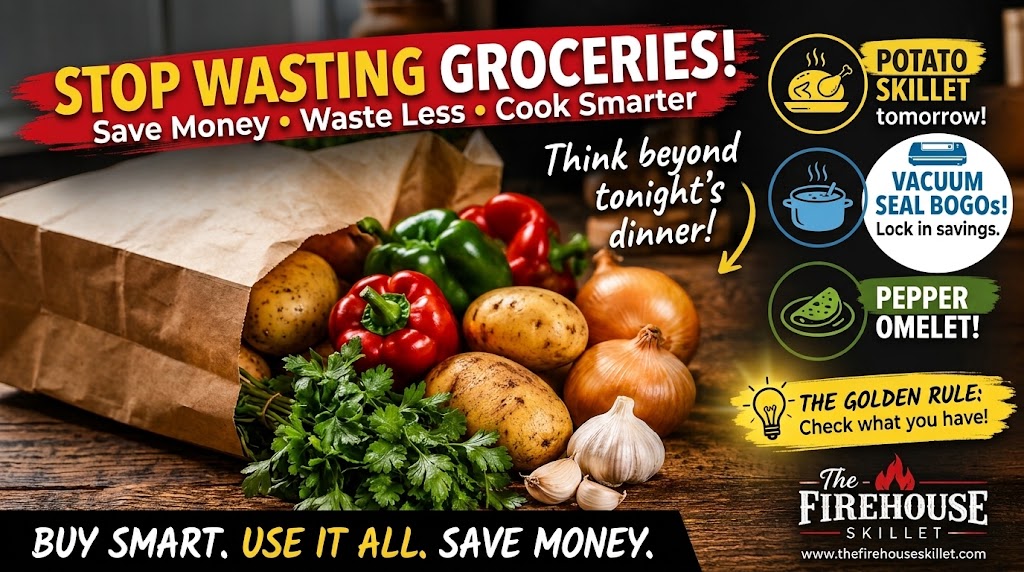
If 30 years in the firehouse taught me anything, it’s how to feed a hungry crew of 5-10 without blowing the budget. At the station house, every dollar counted, and throwing away food was out of the question.
Firefighters make a good living but for some odd reason when it came to dinner it seemed I had to try and stick to a $5 per person budget. To many times I had to kick in extra money myself to get everything I needed. God forbid I announce “It’s 7 bucks for dinner guys” I mean, heads explode!
With grocery prices where they are, I needed and learned strategies.Cutting your grocery bill isn’t about eating boring meals. It’s about shopping with a plan, leveraging store sales, and preserving freshness so your food hits the table instead of the trash.
Here is the complete blueprint to stretch your ingredients, stop impulse spending, and keep more money in your pocket. It was my rules when I worked at the firehouse and has carried on into family life.
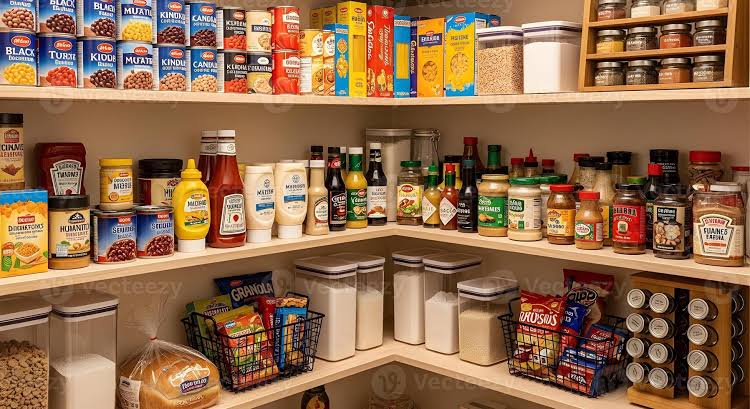
1. Shop Your Kitchen First
The fastest way to waste money at the store is buying things you already have hiding in the back of your fridge, pantry or buried in your freezer.
Before making your weekly list, take 60 seconds to audit your pantry and fridge:
- Potatoes & Onions: Are any starting to soften? Plan to use them first in a hearty skillet dinner.
- Bell Peppers: Have half a pepper left from taco night? Slice it up for tomorrow’s omelet or drop it into a quick skillet.
- Leftover Proteins: A cup of cooked chicken or half a pound of ground beef doesn’t sound like much, but it’s the perfect base for a quick soup or one-pan meal.
- Search the Pantry: See what cans, pastas, bags of rice you already have.
Firehouse Rule: Build your menu around ingredients that will spoil first—not what looks good on social media that day.
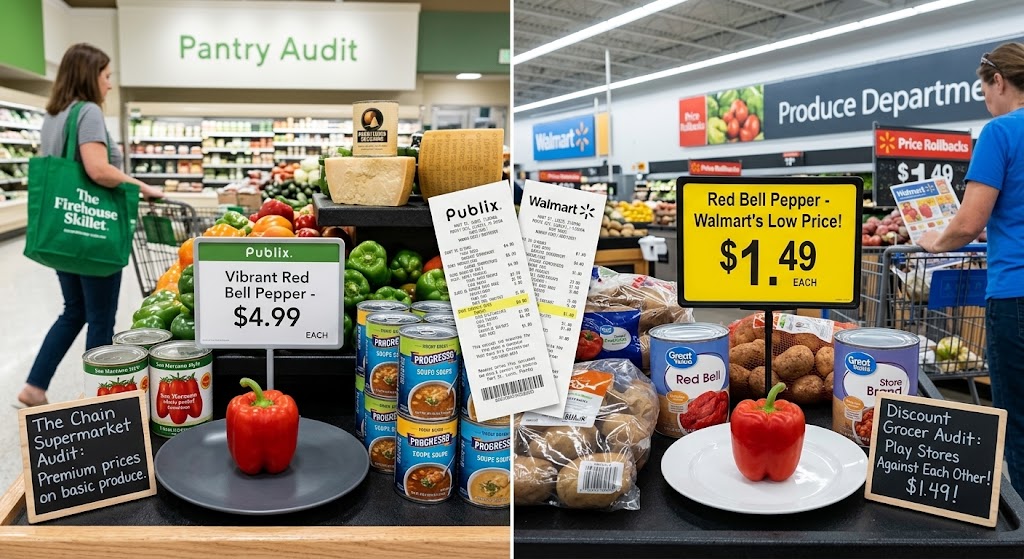
2. Play Stores Against Each Other (Red Peppers for $1.49 vs. $4.99!)
Assuming every grocery store charges the same price for basic produce and pantry staples is one of the quickest ways to overpay. Supermarkets often mark up everyday items significantly higher than big-box grocers. I have actually seen these price discrepancies.
- Fresh Bell Peppers: A single red bell pepper can run $4.99 at a traditional supermarket. That same pepper costs just $1.49 at Walmart or Aldi. Buying three peppers for a skillet meal at full markup adds $10 to your bill for one ingredient!
- Standard markets mark up basic staples like diced tomatoes, broth, and spices by 30% to 50%. Buying these at discount chains instantly cuts your pantry costs in half.
The Firehouse Strategy: Use discount grocers (like Walmart or Aldi) for your weekly produce, dairy, and everyday staples. Then, check local supermarket circulars (like Publix or Winn-Dixie) to grab their weekly BOGO deals and meat markdowns.
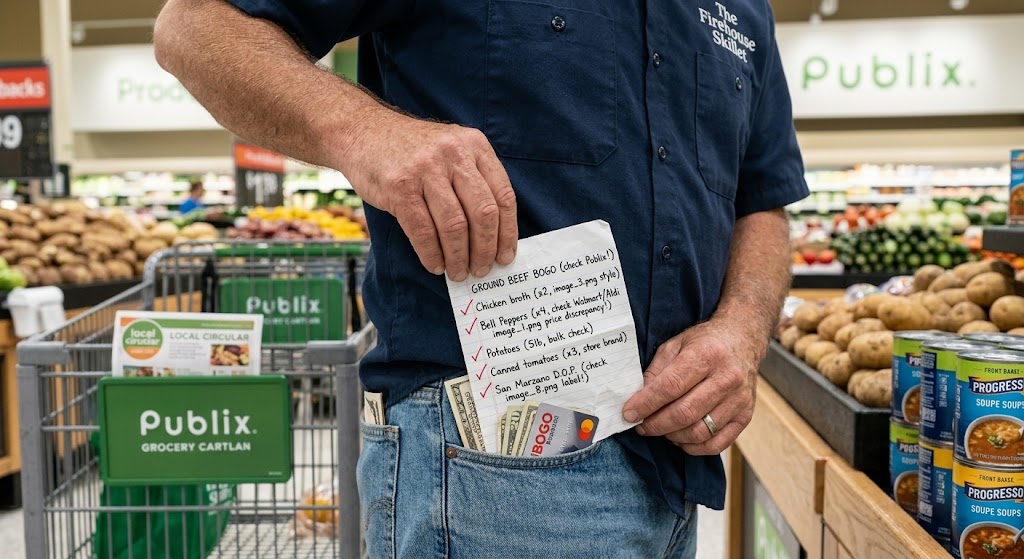
3. Keep a List in Your Pocket and Master Your Store Map
Shopping without a list is a fast track to overspending. Whether it’s scrawled on a piece of paper in your pocket or typed out on your phone, keeping a running list keeps you laser-focused.
Over time and practice, you learn which store carries specific items cheapest. Bring a quick list and know your target aisles before stepping through the sliding doors. Get in, grab the best deals, and get out without falling for marketing traps.
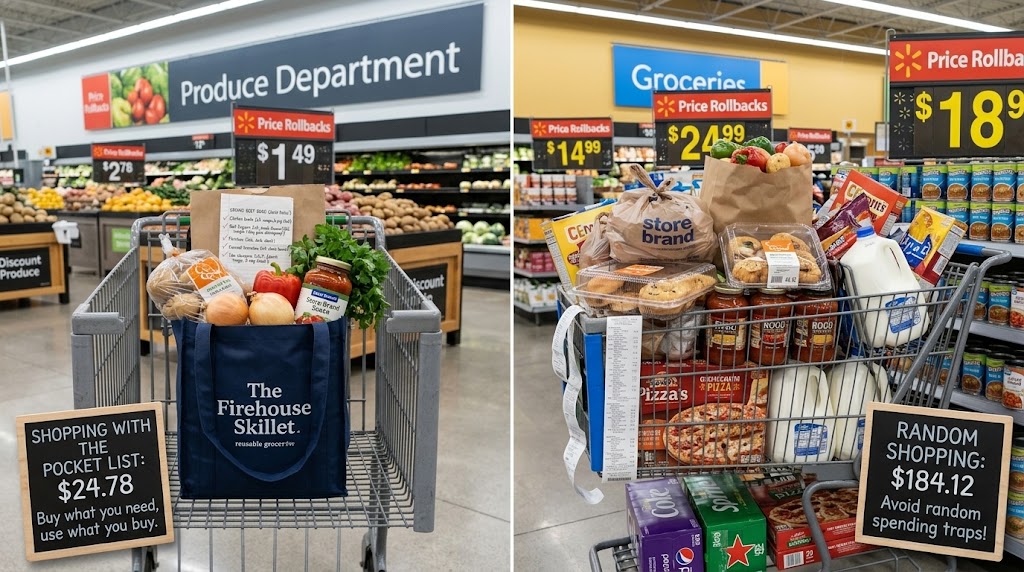
4. Stick to the List: No Random Shopping
It sounds simple, but discipline is the hardest part of grocery shopping. Walk right past shiny end-cap displays and “limited-time offers” that aren’t on your list.
Random shopping is how a quick trip for a gallon of milk turns into a $100 cart full of impulse purchases. If it wasn’t written down in your pocket before you walked through the door, it doesn’t go in the basket. Buy what you need, use what you buy, and leave the rest on the shelf. They will go on sale another day.
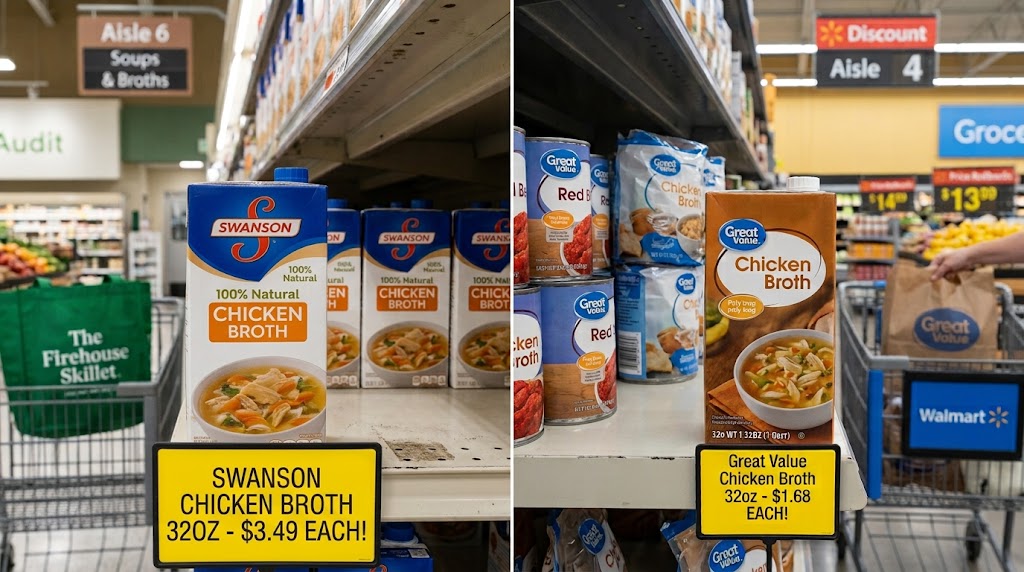
5. Stop Paying for the Label: Buy Store Brands
Let’s be honest—we aren’t buying fine wine here; we’re buying garlic powder, chicken broth, rice, and canned beans, for God’s sake.
Paying extra just for a fancy name-brand printed on the package is throwing money away. Many store brands are actually made by those exact same major manufacturers, packaged up, and relabeled with the store’s logo.
- The Staples That Don’t Care About Labels: Spices, flour, sugar, salt, rice, canned beans or chicken broth taste identical whether they cost $1.00 or $3.00.
- Instant Savings: Swapping your name-brand pantry staples and baking supplies for store brands instantly cuts your grocery bill by a quarter with zero difference in quality.
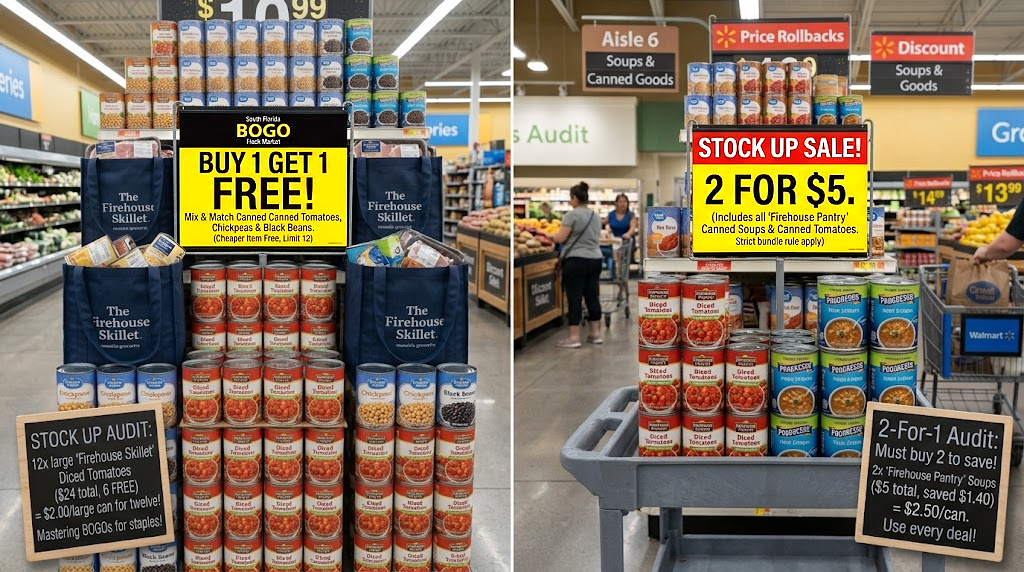
6. Stock Up on BOGOs, Two-Fers, and Avoiding the Checkout Trap
When your local grocer runs a BOGO or “two-fer” sale on weekly staples, take action. That is your cue to stock the pantry.
On a normal shopping run, your goal is to stick to your store brands, check your pocket list, and hunt for that “You Saved” label to clear at least 25% off your total. But when opening sale day hits (like Thursdays at Publix), you change the rules entirely:
- Go Blind for the BOGO: On those days, you don’t go for a full cart of groceries. You walk in blindly and shop strictly for BOGOs and two-fers on stock items—boxed broth, rice, canned diced tomatoes, and long-term pantry essentials.
- Walk Out at 50% Off: Because you are only buying items on deep discount that you know you will use month after month, you walk out of the store cutting your pantry costs right in half. It becomes a game to see how much you can save!
- Watch Out for the BOGO vs. “Two-Fer” Trap: Not all multi-buy sales are created equal. At most stores, BOGO items ring up at half-price individually. You can grab just one for 50% off. Watch out for “2 for $4” signs, though. Many supermarkets require you to buy both to get the discount. They want you to take 2 to help get rid of stock. Taking one doesn’t help them. Always check the fine print!
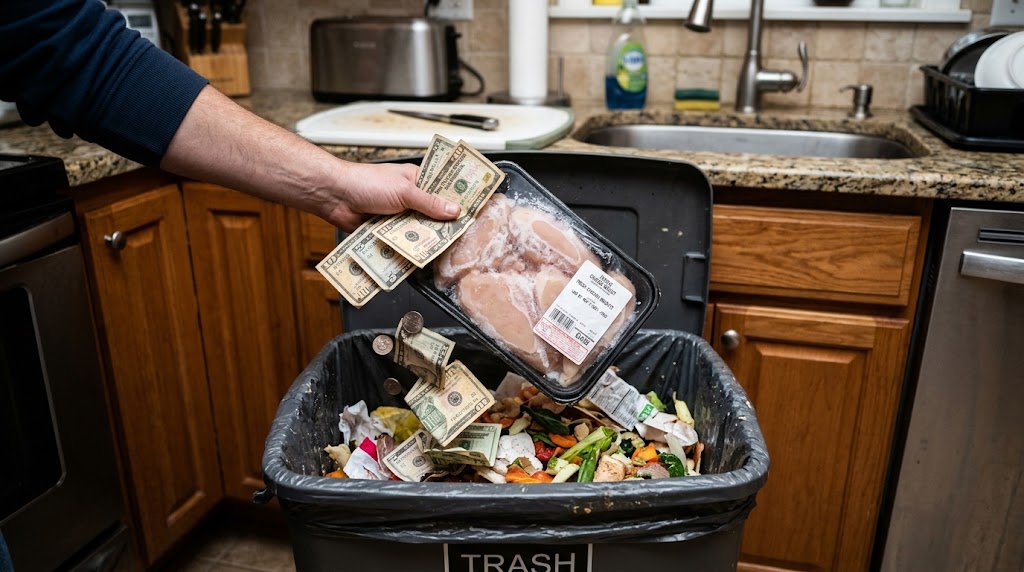
7. Stop Throwing Away $10 Bills: Get a Vacuum Sealer
How many times have you said, “It’s time to clean out the freezer,” only to pull out a mystery package buried at the bottom, peel back the frosty store plastic, and find a gray, freezer-burned block of meat? Into the trash it goes—right along with a ten-dollar bill.
Don’t overthink getting a vacuum sealer. Don’t wonder if you’ll use it—just get one!
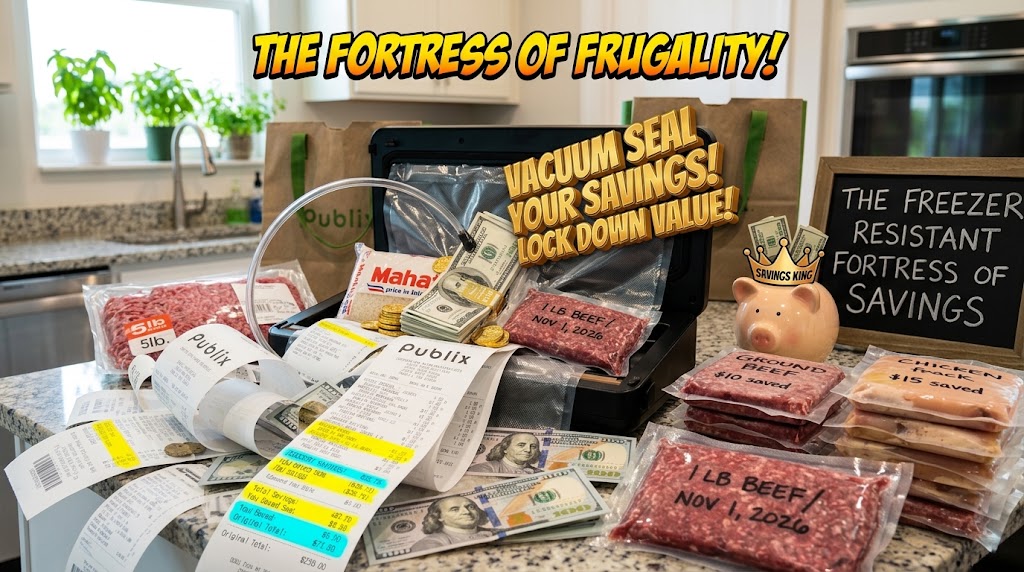
- It Pays for Itself: A good vacuum sealer costs $60 to $80 on sale. If you toss out just four or five freezer-burned family packs of ground beef or chicken throughout the year, you’ve already thrown away more cash than the machine costs.
- Zero Freezer Burn: Standard store packaging lets air in. Sucking 100% of the air out stops freezer burn dead in its tracks. I’ve sealed good steak for months, thawed it, and it came out like I just bought it.
- Portion Control: When you buy bulk ground beef on sale, portion it into 1-pound blocks, seal them flat, and stack them neatly in the freezer. They thaw faster and taste just as fresh six months later as the day you bought them.
- Vacuum Sealing Frozen Staples & BOGOs: When buying large store-brand poly bags or taking advantage of BOGO deals on frozen veggies (like broccoli florets, corn, or green beans), take them out of their original flimsy bags immediately.
- Prevent Freezer Burn & Extend Shelf Life: Original store packaging leaks air, leading to ice crystals and freezer burn. Vacuum sealing removes 100% of air and moisture, extending freshness, properly sealed and stored for up to 2–3 years.
- Compact Storage & Stackable Savings Blocks: Vacuum sealing compresses the vegetables flat, turning bulky, awkward bags into slim, stackable “savings blocks” that free up critical freezer space.
- Label & Date: Always label the sealed bag with the contents and date to keep your freezer organized and ensure you use every deal to its full potential.
- Vacuum sealer: I see nothing on amazon that’s a bargain. The best prices and sales on them are usually in Costco or Sam’s Club. They are frequently marked down $20. They don’t come with a large amount of storage rolls so get them on amazon.
- Repurchase: If you already own a sealer you can get a more bulk buy on vacuum sealer storage rolls on amazon they are relatively cheap and go a long way. I added a link on a good price for rolls to save you the trouble. I just purchased it myself and with the holidays coming up, I’ll need them.
8. The Holiday Playbook: Box It Up & Master the Turkey Game
When the holidays roll around in November and December, don’t get caught in the panic of crowded aisles and inflated prices:
- Menu Planning: Map out your exact menu and write out your recipe lists weeks in advance so you know precisely what to grab when the holiday sales drop.
- The Holiday Non-Perishables Box: Starting in late October, grocery stores drop prices on holiday baking staples. Load up early and keep a separate box dedicated solely to canned pumpkin, stuffing mix, cranberry sauce, flour, sugar, and broth. By crunch time, your pantry is already doing the heavy lifting.
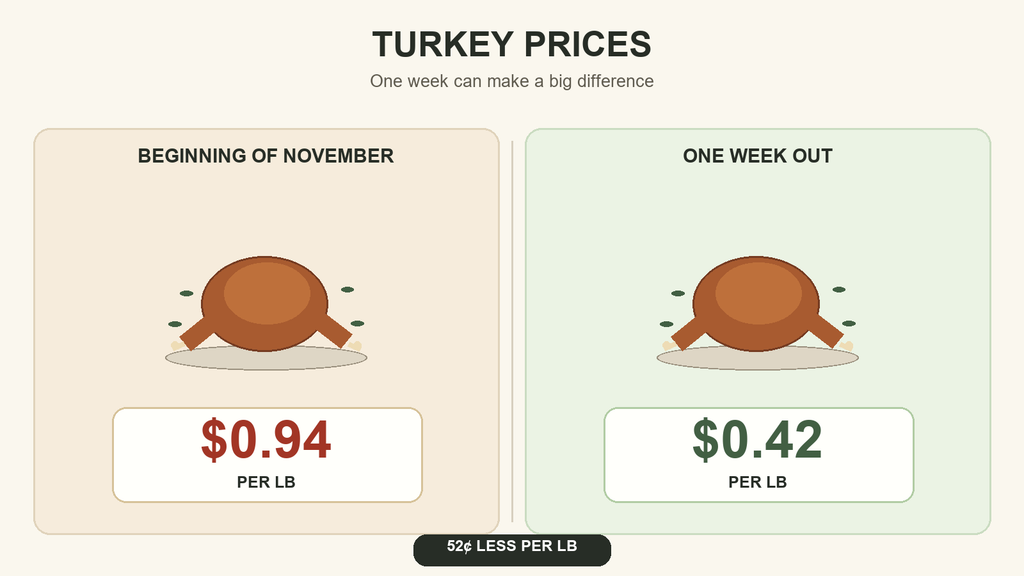
- The Turkey Price Game: Don’t panic-buy your turkey too early at 94 cents a pound. Wait for that sweet spot a week or so out when stores drop the price down to around 42 cents a pound as a loss leader.
- Respect the Thaw: Plan ahead and factor in 4 to 5 days for a large bird to safely thaw in the fridge so you aren’t stressing at the last minute.
9. Think Beyond Tonight’s Dinner
Instead of viewing an ingredient as a single meal, treat it as a building block for 2 or 3 completely different dishes throughout the week:
- Potatoes: Roast a batch of Yukon Golds on Monday. Use the leftover cooked potatoes on Tuesday night to get a head start on a quick skillet dinner.
- Bell Peppers & Onions: Chop several peppers and onions all at once. Half goes into tonight’s meal; the rest gets sealed in an airtight container for breakfast scrambles or fajitas.
Put It Into Practice Tonight!
Slashing your grocery bill doesn’t take hours of prep—just simple shifts in how you shop, store, and cook.
Looking for an easy recipe to use up extra potatoes, peppers,onions and ground beef sitting in your kitchen right now? Check out our Southwest Cheesy Beef & Potato Skillet—it comes together in 30 minutes in just one pan and is an amazing fall dinner!
This dish is an example, where I made 6 servings with extra ingredients I purchased for a skillet dinner 2 days earlier. When I do this I feel like I made a free dinner and half of that 3 lb bag of potatoes didn’t just grow eyes in my pantry!
I hope my advice helps out in your home and decreases some of the stress of the upcoming holidays. If you enjoyed this blog please follow me on Pinterest and Facebook for more upcoming recipes and occasional advice.
I wish all my readers and followers a happy, healthy and safe holiday season and I look forward to providing more creations to you guys in the future. Stay well!