Classic Chicken Piccata
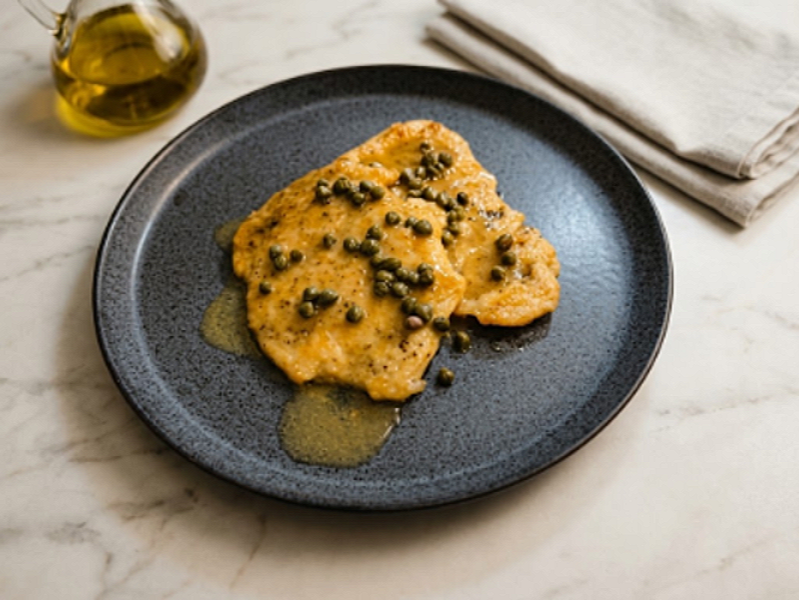
You would never think this would be a firehouse dinner. It seemed all the guys that were cooks in other stations made the same three dinners at work. Burgers, chili and then, I mean, how many times can you eat chicken, broccoli and rice? Some of those guys acted like they invented it.
I liked to treat my crew to some upscale meals no one else was making at work. The highest compliment I often received was to get a call the next morning from a coworker asking how to make last night's dinner for his family. Chicken Picatta was one of them. And I was happy to share.
I've seen many recipes for Chicken piccata that add extra ingredients besides the classic ingredients. But why tamper with perfection, why make it complicated. It's a classic. Chicken Piccata is great as a home, date-night meal for two or can be served on a platter for a small dinner party or in a chafing dish for an Italian buffet-style family occasion.
About the recipe
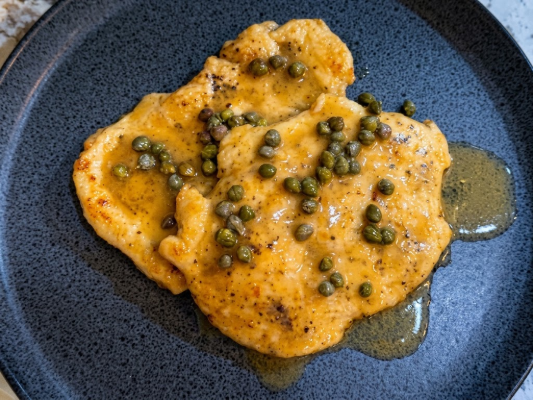
Chicken Piccata is a classic menu staple in every Italian restaurant. Sauteed chicken in a wine, butter and lemon sauce with capers seems simple but does require some technique to get it right. Follow this recipe and it comes out perfect every time. This is a detailed recipe so make sure to read the detailed steps in making the recipe so it is delicious every time.
About the ingredients
Chicken Breasts
You will want to fillet the chicken breast into cutlets. Cutlets will give a nice balance of sauce to chicken ratio for the perfect flavor. Filet the breast and cover with plastic wrap. Using a mallet, pound the chicken starting on the fat end and working the meat to the thin end so the cutlet is an even ¼ inch thick. The plastic wrap actually helps form the breast even thickness when pounded.
2. All-Purpose Flour
Standard unbleached all-purpose flour works best. The light coating protects the chicken from drying out as it sautes. It also leaves some flour in the pan that will help thicken the sauce later so do not wipe out the pan after you saute. Standard unbleached all-purpose flour works best.
Note: Gluten-free option: use 1:1 ratio of gluten-free baking flour and rice flour or 2:1 ratio using cornstarch with one of the flours.
3. Unsalted Butter and Olive oil (for sauteeing)
Combine the olive oil and butter. This gives you a good combination that will give you a high smoke point for sauteeing that will prevent burning. Adding in the butter helps the chicken get that golden brown look you want.
4. Dry White Wine
A dry white wine helps deglaze the pan, loosening the brown flavorful bits that will enhance the sauce. It also adds acidity to counterbalance the rich butter. Use a dry white wine such as Pinot Grigio or Sauvignon Blanc
Substitutions: To make this non alcoholic double the use of chicken stock. You can also substitute with dry white vermouth if you forgot the wine.
5. Unsalted Chicken stock
Chicken stock adds body, savory depth and volume to the sauce. Always use unsalted broth as we want to control the salt content manually. Having salt in a sauce that we are going to reduce, as liquid evaporates, the salt does not, it concentrates in the reduced sauce. This is the importance of using unsalted butter as well.
6. Fresh Squeezed Lemon Juice
Always use fresh squeezed lemons. They are inexpensive and also make a nice garnish. Lemons give the Piccata that crisp, sharp acidic flavor that defines the dish. Piccata roughly translates to “sharp”. Bottled lemon juice contains preservatives that can give the dish a bitter, metallic flavor when heated. Make sure you do not just squeeze the lemons into the sauce. Add it from the measuring cup slowly after you added the capers and adjusted the salt so the lemon balances with the sauce.
7. Capers
Capers provide a burst of tangy, floral and salty contrast to the sauce. It also adds some texture and sort of a garnish within the sauce for the dish. Look for nonpareil capers packed in brine (found near the olives and pickles in the grocery store). Rinse them before adding to the sauce.
8. Cold Unsalted Butter (pan finish)
Cold unsalted butter is used during the emulsification stage of the sauce. We have all seen a broken sauce where butter seems separated from the wine, chicken stock reduction. Using cold butter off the heat, swirled and whisked in keeps the sauce together. The cold butter stage is where most cooks lose the classic chicken piccata presentation. The sauce will become separated. Keep the butter cold until you are ready to use it.
Fresh Parsley & Lemon Slices
Sprinkled parsley adds a nice green color contrast to the dish making it present nicely and the lemon slices make a nice touch either whole sliced adding a couple on top of or alongside the Piccata using wedges.
Tips for success (what makes this Piccata perfect)
Pat the chicken dry: Before dredging in flour. The moisture will make the flour into a paste. Drying the chicken will ensure the flour evenly coats the chicken. I salt and pepper the chicken directly. Salt will begin to draw water out so pat the chicken dry before dredging in the flour.
Why the cold butter matters: Montering or Monter au beurre is the method used to emulsify the sauce. Warm butter releases its fat as soon as it hits the hot sauce causing the sauce to separate. Cold butter taken directly from the fridge melts slowly and should be done off the heat! Allowing the milk solids and fat to blend slowly when whisked and swirled into the pan liquid. Montering or Monter au beurre is the method used to emulsify the sauce and give the Chicken piccata its glossy look.
Rinse the capers: Capers are packed in brine or salt. Giving them a quick rinse removes excess sodium so you taste more the tangy flavor of the capers rather than salt.
About salt: “You can add salt but you can't take it out” is the old saying. I have seen many recipes that add salt (and pepper) to the flour. Or salt and pepper to the emulsified sauce before adding capers. I do not do this. I have learned the hard way that you always want to control the salt. Yes, of course I have ruined many dishes by oversalting like anyone else. Mistakes happen. However, I try to make sure salt is mostly manually controlled. Every ingredient, such as salted butter, salted chicken broth and not rinsing capers can all oversalt the dish before you even take a taste. I salt and pepper the chicken directly, press it into the chicken then use a paper towel to dry them and then put it right into the flour and into the pan. Check the need for salt at the end. Now, if you oversalt the chicken? Well, that’s on you.
Have all the ingredients prepped and ready: This goes for any recipe you make. Not prepping can cause you headaches of all kinds and sometimes a ruined dish. How many times have you forgotten an ingredient because you didn't prep them first?
Balance the lemon: When adding the lemon juice at the end, Do not squeeze the lemon directly into the sauce. I like to juice the lemon into a measuring cup and slowly add the juice while stirring the sauce, then tasting. You don’t want the lemon overpowering the sauce. Add it to the flavor profile you like so it is balanced in the sauce. Another instance, like the salt, where you cannot remove it once you have added it.
Make-Ahead instructions
Prepping Cutlets: You can filet the chicken into cutlets, pound them and store them flat in an airtight container separated by layers of parchment paper up to 24-hrs ahead of time. Do not season or dredge in flour until sauteing.
Partial or advance cooking: A time saver here can be sauteing the cutlets 30 minutes prior to making the sauce. Store on a covered dish at room temperature. Build the sauce before serving. I have sauteed the cutlets the day before for a dinner party. Saute the cutlets. Allow them to come to room temperature and store them in between parchment paper in an airtight container in the fridge. Take them out of the fridge 30 min before adding to the sauce in the pan and allow them to warm in the sauce. However, you will lose some of the flavor you left in the pan the day before.
Frequently Asked Questions
Why did my sauce break or come out oily?
Sauces break when butter is added over direct, high heat or if the butter was not cold directly from the fridge. You can try to fix this by adding a splash of cold chicken stock and whisk it vigorously until it comes back together.
Can I use store bought chicken cutlets?
Absolutely. This is a time saver however, may cost you a few more dollars. Lay them on your cutting board and check they are even thickness. You may need to pound them.
What if the sauce is too salty?
The simple fix is to toss out the sauce and start over. Simply wash your pan or grab another one and rebuild your sauce using unsalted ingredients, salting after adding the capers at the end and to taste. The only loss is the flavors left behind when you seared the cutlets.But, you saved the dish.
How do I make this for a crowd?
Ok, this can be done. I have done it. Saute as many cutlets as you need and place them on a covered platter. Then, multiply the sauce recipe for as many cutlets you made and build the sauce. Then, in small batches, transfer the chicken to the sauce, coat the cutlets, then put them back on the platter. Then, pour the remaining sauce over the platter and garnish. This especially works great if you are using chafing dishes if you made the chicken the night before.
Classic Chicken Piccata
Serving time and info
Prep time: 15 minutes
Cook time: 20 minutes
Total time: 35 minutes
Yield: 4 servings
Serving size: 1 Cutlet (with 3 Tbsps sauce)
Ingredients
Chicken & Dredge
2 large boneless, skinless chicken breasts (cut horizontally into 4 thin cutlets)
Salt and freshly ground black pepper, to taste
1/2 cup all-purpose flour
Sauteing
2 tbsp unsalted butter
2 tbsp olive oil
The Pan Sauce
1/2 cup dry white wine (Pinot Grigio or Sauvignon Blanc)
1/2 cup unsalted chicken stock
1/4 cup fresh lemon juice (to taste using 1 to 2 lemons added after after the capers and after you adjust the salt)
3 tbsp capers, rinsed and drained
3 tbsp unsalted butter, softened
Fresh parsley, chopped (for garnish)
Thin lemon slices (for garnish)
Recipe
Step 1. Prep and pound (tenderizing the chicken)
1.On a cutting board using a sharp knife, filet the chicken breasts.
2.Cover the cutlets with plastic wrap and pound to ¼ inch thickness
3.Season both sides with salt and freshly ground pepper and press into the chicken.
Step 2. Dredge
Spread flour onto a shallow high rimmed dish or plate
Pat the chicken dry (don’t skip this step)
Dredge each piece of chicken into the flour pressing it to coat both sides. Shake off excess flour prior to placing it in the pan.
Step 3. Sear the chicken cutlets
In a pan on medium-low heat add 2 tablespoons of olive oil and 2 tablespoons of unsalted butter until you see it shimmering.
Add the chicken cutlets in a single layer and do not over crowd the pan (work in batches to avoid overcrowding the pan)
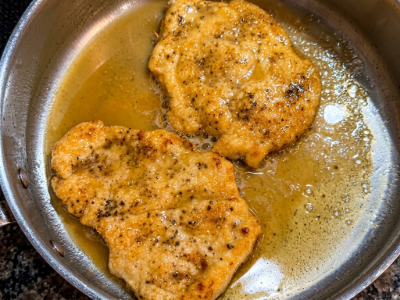
Saute the chicken for 2-3 minutes per side lifting a corner to check sear and cook until golden brown. (you can and should lift the chicken allowing the pan liquids to redistribute quickly under the chicken and don't be afraid to move chicken around in the pan to get even sear as the pan tends to be hotter in the middle)
Transfer the chicken to a plate and tent loosely with foil
Step 4. Build the sauce in the pan
Pour the white wine and the chicken stock into the hot pan.
Use a wooden spatula to scrape up the flavor packed brown bits stuck to the bottom of the pan.
Bring the mixture to a simmer and let it reduce by about half (approx. 4-5 minutes)
Once reduced, remove the pan from the heat and add 3-4 pats of cold butter. Stir or whisk and swirl the mixture until the butter melts until the sauce comes together (emulsifies) then place the pan back on the heat on low
Drain and rinse the capers and add to the pan and stir.
Step 5. Finish and coat
Taste the sauce and adjust the salt as needed. Now, add your lemon juice from the measuring cup to the sauce. Stir and swirl the pan balancing the flavor to your liking.
Return the chicken cutlets to the skillet, coating them in sauce. Spoon sauce over the top, warm the chicken in sauce and watch the sauce thicken.
Step 6. Serve
Plate the warm Piccata immediately.
Spoon the pan sauce generously over the top of the chicken.
Garnish with fresh lemon slices over the top of the chicken or wedges alongside and chopped parsley.
Estimated Nutritional facts
Per serving I 1 cutlet with sauce
Calories 380 I Protein 31g I Carbohydrates 11g I Total fat(10g saturated fat) 22g I Cholesterol 105mg
Sodium 430mg I Fiber 1g I Sugars 1g