The Last Fresh Pasta Dough Recipe You’ll Ever Need
Why You’ll Love This Recipe
Making pasta dough seems like a scary, daunting task. In reality, it is a very simple process using just three basic ingredients.
Once you try it, you will quickly learn the right consistency. Fresh pasta cooks so fast that making it yourself often takes less time than boiling box pasta!
Why Make Your Own Pasta?
You can mix this easy dough on a clean counter, on a cutting board, or inside a food processor. Using a stand mixer also makes quick work of bringing the ingredients together.
Making fresh pasta dough ahead of time saves you about 20 minutes at dinner. Plus, the tender texture and fresh flavor of homemade pasta beat store-bought boxes every single time.
Master the Basics
If you are already comfortable making dough, feel free to jump straight to the recipe for exact ingredient ratios. Otherwise, stick around to learn how simple this process can truly be.
We will cover ingredient choices, dough-shaping techniques, and common mistakes to avoid. You will be making fresh, restaurant-quality pasta at home without any frustration!
About the Recipe
Making fresh egg pasta dough relies on a simple blend of flour (like 00 flour or all-purpose) and fresh eggs. It creates a tender, sturdy dough that is easy to form into all your favorite shapes.
While culinary textbooks often teach a strict 1-to-1.5 ratio of eggs to flour by weight in grams, we do not need to run a laboratory experiment to make great pasta! This recipe uses a reliable, easy-to-remember ratio by keeping the egg count consistent and adjusting only the flour. Keep this handy recipe taped inside your kitchen cabinet door for quick reference whenever you are rolling out pasta.
About the Ingredients
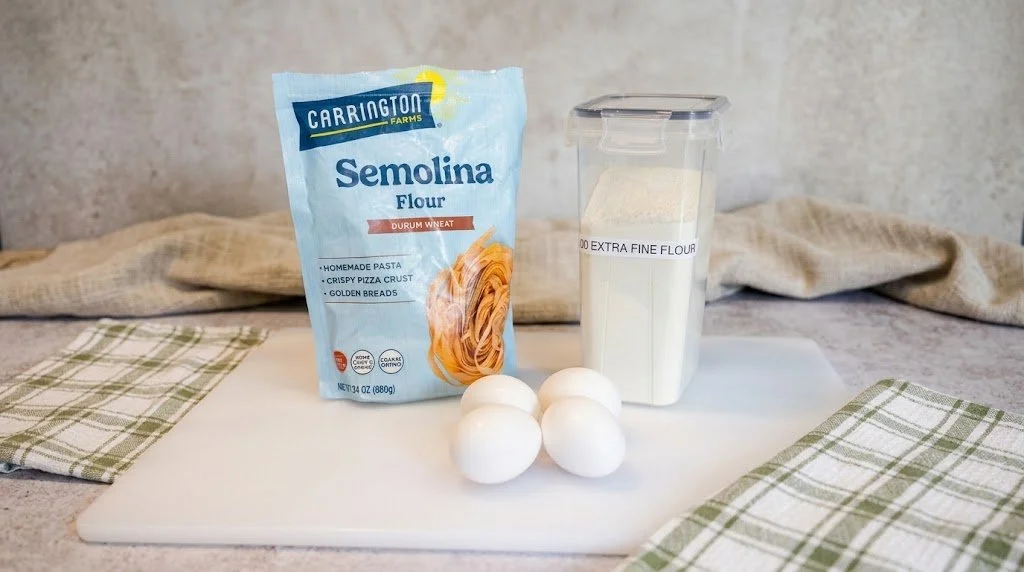
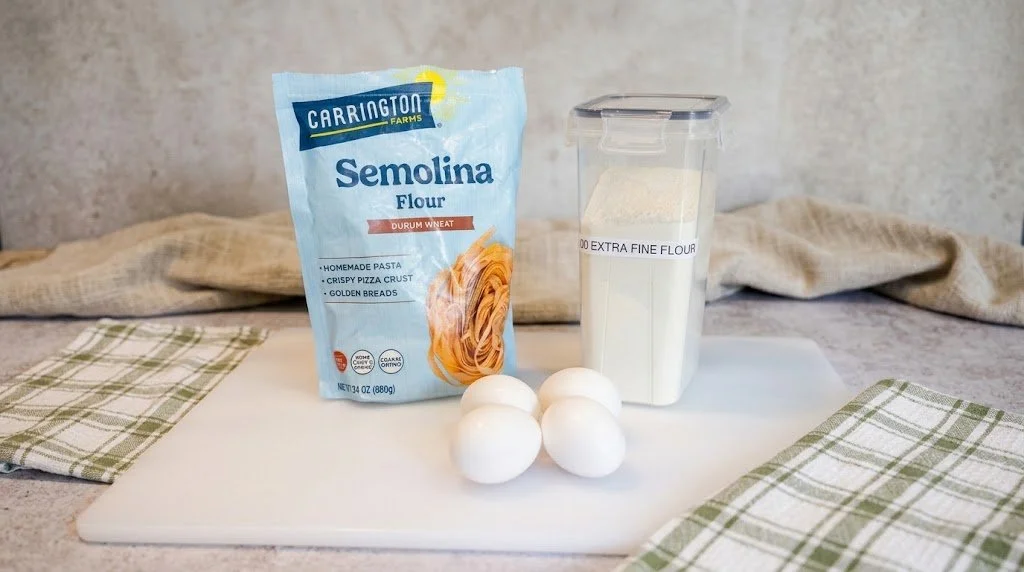
- Semolina Flour: Made from hard durum wheat, semolina has a coarse, grainy texture and high protein content. It creates a tight gluten network that holds its shape under heat so your pasta never turns soggy or mushy.
- All-Purpose Flour: A blend of soft and hard wheat that creates a softer, more pliable dough. Using only all-purpose flour yields a paler, softer noodle that should be enjoyed immediately after cooking.
- “00” Flour: Extra-fine milled flour that produces a silky, ultra-smooth dough that is very easy to handle. Combining “00” flour with semolina gives you the perfect balance of tender texture and sturdy structure.
- Large Eggs: Eggs provide the essential moisture, rich flavor, and color for your dough. Using three whole eggs plus one yolk for a pound of pasta keeps the dough from turning sticky or gummy.
Instructions
Form the Dough
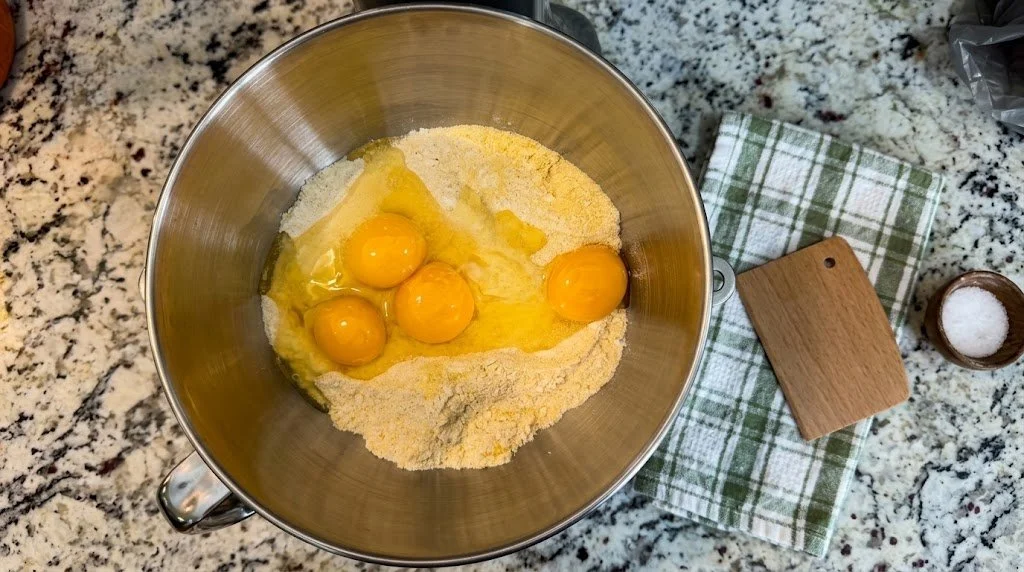
Place your semolina and all-purpose flour into the bowl of a stand mixer or food processor, then crack in your eggs. Let the machine run for about one minute until the mixture comes together into a smooth ball. You can also use the traditional method by shaping a flour well on your counter, adding the eggs, and gently whisking them together with a fork.
Knead the Dough
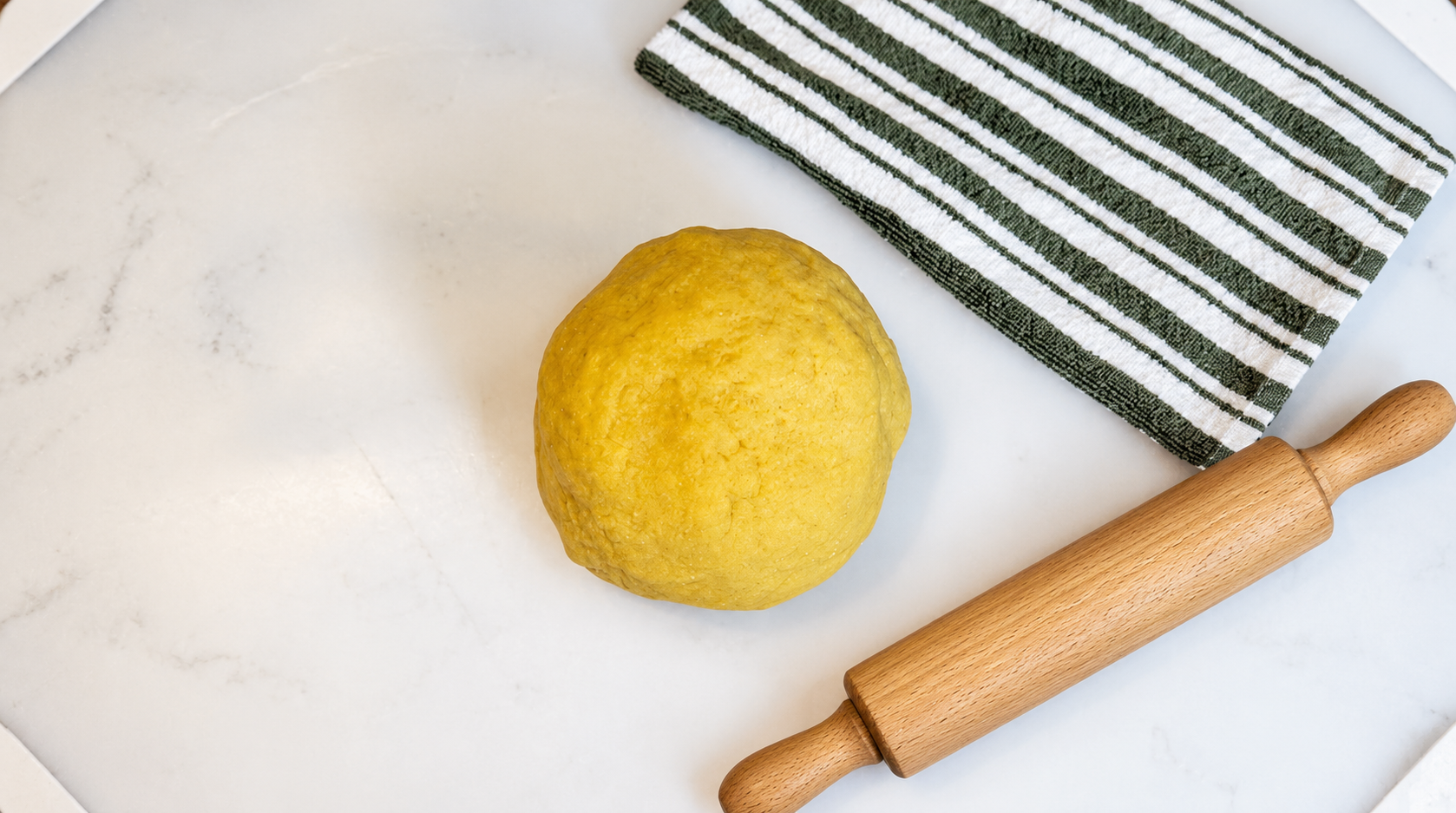
Transfer the dough onto a clean, lightly floured surface. Knead the dough using clean hands for a few minutes to build the gluten network and evenly distribute the moisture throughout. Stop kneading once the dough turns pliable, smooth, and supple.
Rest the Dough
Wrap the ball of dough tightly in plastic wrap and let it sit on the counter for 20 to 60 minutes. This resting period allows the gluten to relax so the dough rolls out smoothly without springing back. Once rested, your pasta dough is ready to roll and cut into your favorite shapes!
Tips and Tricks for Perfect Pasta Dough
Measuring flour with cups instead of a scale can cause slight variations depending on how packed or fluffed your flour is. Adding a splash of water or a dusting of extra flour easily fixes any consistency issues.
While many chefs measure flour in grams for exact precision, kitchen scales are not strictly necessary for great results. Even when weighing ingredients, differences in egg size and humidity mean you may still need minor adjustments.
Fixing Dry or Crumbly Dough
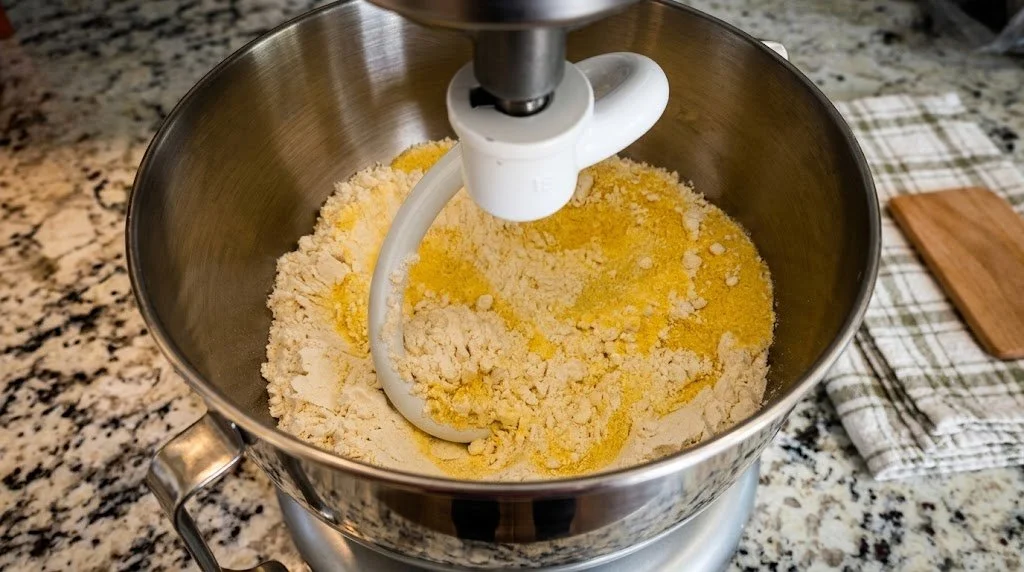
If your ingredients look like crumbly coffee cake and refuse to bind together in the mixer, your dough is simply too dry. Do not panic, as this is very easy to fix in just a few seconds.
Add one teaspoon of water at a time while the mixer runs, letting it incorporate fully before adding more. You will see the crumbly mixture suddenly gather into a smooth, cohesive ball of dough.
Fixing Sticky or Wet Dough
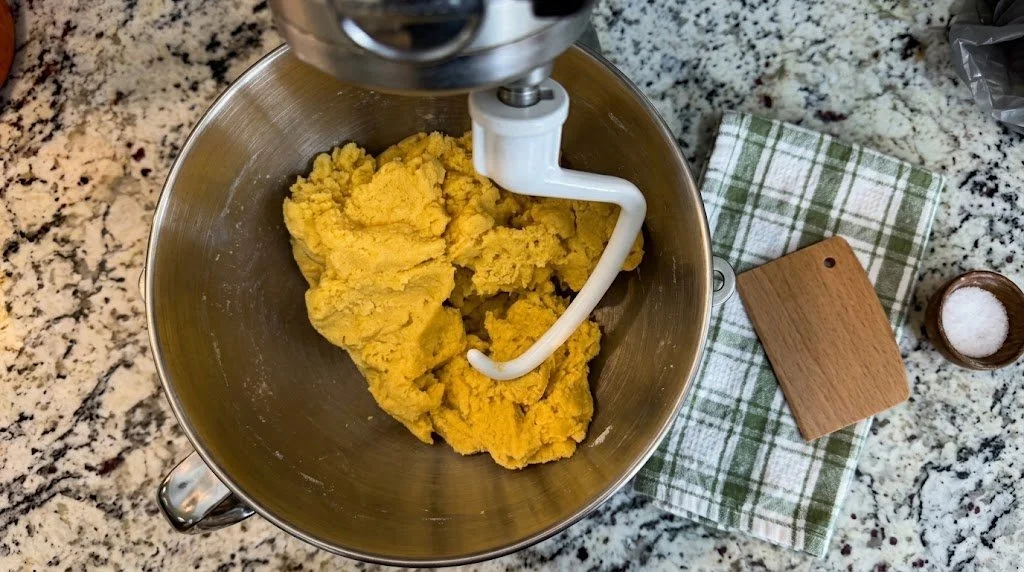
If your dough forms a ball but feels gummy and sticky to the touch, it contains too much moisture. Sticky dough will tear and jam inside a pasta roller, making it frustrating to clean out.
To fix this, lightly roll the dough ball in extra flour on your work surface. Knead the flour into the dough, repeating with small amounts until it feels soft, smooth, and no longer tacky.
Simple Fix in a Nutshell
- Dry, crumbly dough: Add water, one teaspoon at a time.
- Wet, gummy, or sticky dough: Add flour, a light dusting at a time.
Pro Tips for Rolling and Shaping
- Test a small piece first: If using a pasta roller, pass a tiny piece through to test for stickiness; if it sticks, trim it off and knead extra flour into the main ball.
- Dust before rolling: Generously dust your flattened dough with extra flour before feeding it through machine rollers to prevent tearing.
- Rest for hand-rolling: If using a traditional rolling pin, letting the dough rest a full hour relaxes the gluten completely so it won’t spring back.
- Prep for baked dishes and soups: Roll dough slightly thicker for lasagna, manicotti, or soups, and precook it very al dente so it absorbs your rich sauces and broths without turning mushy.
Frequently Asked Questions
- Can I just use all-purpose flour and eggs? Of course! Just keep in mind the finished noodles will be slightly paler, so be sure to cook them strictly al dente to prevent a mushy texture.
- Can I make the dough ahead of time? Yes, wrapping the dough ball in plastic wrap and chilling it in the refrigerator for up to 24 hours is a great time-saving strategy. Just set it on the counter for one hour before rolling to bring it back to room temperature.
- Why won’t my dough roll out flat? If the dough constantly springs back while rolling, it either needs to rest longer to relax the gluten or it contains too much moisture.
- Do I really have to rest the dough? Even a quick 10-to-20-minute rest makes a huge difference; since fresh pasta cooks in just 2 minutes, you will easily save time elsewhere in your meal prep.
- Can I make gluten-free pasta dough? Yes, simply substitute a 1-to-1 gluten-free baking flour, add a pinch of xanthan gum to mimic gluten, and add 1 to 2 tablespoons of olive oil if the dough feels dry while kneading.
- Can I freeze the dough for later? Freezing the raw dough ball is not recommended because thawing causes moisture and texture issues. Instead, shape your pasta noodles first, let them dry slightly, and freeze the cut pasta directly.
Final Thoughts
I can’t express enough how easy making your own pasta dough truly is or how much better your finished meal will taste. I was nervous the first time I tried it—a grown firefighter stressed out over flour and eggs!—but now it is as second nature as boiling an egg.
My dough comes together in minutes, shapes in no time, and uses basic baking aisle ingredients. Serving fresh, handmade pasta instantly elevates any dinner into a special occasion for family and guests alike.
The Recipes For Pasta Dough (Including Gluten-Free)
Equipment
- 1 Kitchen aid Stand Mixer (if available)
- 1 Food Processor (if available)
Ingredients
Common Pastas and Dough Ratios
Stuffed & Filled Pastas (Ravioli, Tortellini, Stuffed Shells, Bow-Tie) The Style: High structure strength to hold fillings and not burst or tear. The Flour mix: 1 ⅓ cups Semolina flour + ¾ cup 00 or AP flour. The Liquid: 3 Large eggs +1 yolk.
Cut Ribbons & Sheets (Spaghetti, Fettuccine, Linguini, Lasagna, Manicotti) The Style: More even balance, Firm al dente bite. The Flour Mix: 1 cup Semolina flour + 1 ½ cups 00 or AP flour. The Liquid: 3 Large eggs + 1 yolk
Gluten-Free Master Pasta Dough The Style: use for most common pastas typically made. The Flour mix: 2 cups 1-to-1 Gluten-free baking flour (such as Bob’s Red Mill 1-to-1) The Binder: 1/2 teaspoon of xanthan gum if your 1-to-1 blend lists xanthan gum in the ingredients or use 1 to 1 1/4 teaspoons if your flour does not contain it. The liquid: 3 large eggs + 1 yolk
- Note: a moist gluten-free dough can get very messy when rolling it. To ensure it is the proper consistency add your gluten-free flour to fix it.
Instructions
Making the Dough
Mixing Stand or Food Processor Method
- Measure out the flours in a measuring cup and add to the mixing bowl or processor. Then add eggs and on low setting mix the ingredients until a semi-ball forms. (if crumbly, add a teaspoon of water at a time until a semi-ball forms)
- Remove the dough and test for consistency (not to sticky, gummy)Knead the dough, if it feels gummy, roll in flour until the dough no longer is sticky and knead a bit more.
- Form the dough into a ball and wrap it in cling wrap and let it rest for 1 hour before making pasta.
Counter-top Method
- On a clean, dry counter-top or cutting board, measure out the flours and make a pile of flour on the surface you are using and form a well in the center. Crack your eggs and add them to the well.
- Using a fork begin to fold the flour into the eggs continuously working from the outside-in until the dough forms. Adjust moisture or dryness as needed using 1 teaspoon of water at a time until the ball forms or add flour if dough is too sticky.
- Form the dough into a ball and wrap it in cling wrap and let it rest for 1 hour before making pasta.